
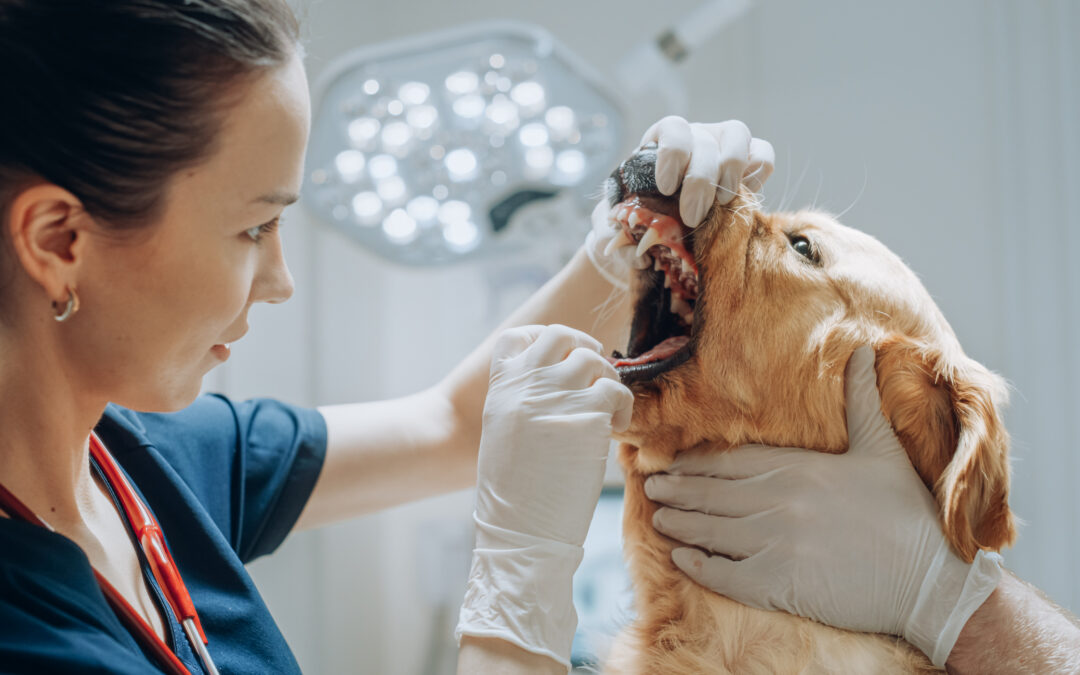
A single look inside your pet’s mouth answers one question: what does it look like today?
A history of dental evaluations can answer something more useful: what is changing?
Perhaps tartar is accumulating more quickly than last year. A tooth that once looked stable now appears damaged. Gum inflammation is appearing in one area repeatedly. Home brushing may be keeping buildup relatively controlled, or it may no longer be enough.
That longitudinal view is the real value of regular pet dental care.
For pet owners in Vancouver, WA, dental visits can create a record that helps the veterinary team distinguish a stable mouth from one that is gradually moving toward disease.
Think of Pet Oral Health as a Timeline
Dental disease is rarely static.
Plaque forms, tartar accumulates, gums may become inflamed, and supporting tissues can change over time.
That means the most useful question is not always whether your pet has dental disease.
Sometimes it is whether your pet’s mouth is healthier, less healthy, or relatively unchanged compared with before.
Previous findings can provide context for tartar accumulation, gum condition, damaged teeth, previous extractions, changes in chewing behavior, and previous professional cleanings.
This turns each visit into another point on an oral-health timeline.
Pet Dentistry Creates a More Complete Record
Owners can see only part of the mouth at home.
Professional pet dentistry may provide additional information about teeth, gums, and structures that are not easily evaluated during casual observation.
At this Vancouver practice, the dental care plan may include general anesthesia, full-mouth dental X-rays, scaling and polishing, and preanesthetic bloodwork.
Full-mouth X-rays are particularly valuable for documentation because they can reveal conditions beneath the gumline that cannot be judged from appearance alone.
That creates a more complete baseline for future comparison.
Not Every Change Requires the Same Response
Finding a change does not automatically mean extensive treatment is necessary.
A veterinary team may recommend continued monitoring, better home brushing, adjusting dental products, professional cleaning, imaging, treatment of a damaged tooth, or a shorter follow-up interval.
The value lies in matching the response to the finding.
For example, mild increases in plaque may lead to changes at home. A fractured or painful tooth requires a very different conversation.
Regular assessments help separate those situations, while broader preventive care can help put oral findings into the context of the pet’s overall health needs.
Watch for Changes Between Visits
The veterinary record becomes more useful when owners add observations from home.
You do not need to inspect every tooth.
Instead, pay attention to changes in everyday behavior.
Consider mentioning if your pet begins dropping food, chews differently, avoids hard treats, has worsening breath, drools more, stops carrying toys, becomes sensitive around the face, or suddenly prefers softer foods.
These details help connect clinical findings with what the pet experiences day to day.
When Pet Dental Cleaning Enters the Timeline
Professional pet dental cleaning becomes relevant when plaque and tartar accumulation can no longer be managed adequately at home or when oral findings indicate that more complete treatment is warranted.
Scaling removes buildup from areas a toothbrush cannot effectively address once tartar has hardened.
Polishing follows scaling to smooth the tooth surface.
For owners considering pet dental cleaning in Vancouver, WA, knowing when previous cleanings occurred can also be useful.
A pet that develops substantial buildup quickly may need a different long-term plan than one whose mouth remains relatively stable for longer periods.
Dental X-Rays Add Information Owners Cannot See
A healthy-looking crown does not guarantee that the structures below it are healthy.
Dental X-rays can reveal hidden changes involving roots, supporting bone, fractures, and other conditions.
That makes radiographs valuable not only for diagnosis but also for creating a more complete record of the mouth.
If future concerns develop, the veterinary team has more information about what was previously present.
This is one reason professional dentistry provides more than simply cleaner teeth.
Veterinary Dentistry in Vancouver, WA Should Respond to the Record
A pet’s dental history matters.
Two animals may have similar tartar today but very different backgrounds.
One may have previous extractions, repeated periodontal disease, rapid tartar accumulation, tooth fractures, or difficulty tolerating home care.
Another may have no previous dental problems and a successful brushing routine.
That is why veterinary dentistry in Vancouver, WA should respond to both the current mouth and the pet’s history.
The record helps explain the context behind what is visible today.
Pet Dental Surgery Becomes Part of the History Too
When a tooth is fractured, infected, loose, or painful, pet dental surgery or extraction may be recommended.
Once treatment is completed, that information becomes part of the pet’s future dental history.
Knowing which teeth were treated, why treatment was necessary, and whether other areas required monitoring can help guide later decisions.
Each procedure should inform what happens next.
Pet Wellness Exams Can Add New Information
Pet wellness exams and complete dental procedures are not the same service.
However, wellness visits provide opportunities to notice visible changes between more comprehensive dental treatments.
A veterinarian may identify increasing tartar, gum redness, a damaged tooth, oral swelling, or changes in chewing comfort.
These visits may also reveal subtle health changes that can be easy to miss at home.
A routine exam can therefore serve as another checkpoint within the larger dental timeline.
Vancouver Vet Services Can Add Context to the Dental Record
Oral findings are more useful when considered alongside the pet’s broader health and behavior.
Appropriate Vancouver vet services can help connect dental history with eating habits, age, previous medical concerns, and changes owners observe at home.
The goal is not simply to document the teeth. It is to understand how oral health fits into the pet’s overall comfort and well-being.
Keep Your Own Simple Dental Record
Owners can contribute to that history without maintaining complicated notes.
Try recording when professional cleanings occur, changes in breath, new chewing behaviors, broken or discolored teeth, how often you brush, dental products currently used, and changes in food texture preferences.
Occasional photos may also be useful if your pet allows them safely.
The goal is not to diagnose disease yourself.
It is to make gradual changes easier to remember and describe.
Build a Dental History at WellHaven Pet Health Mill Plain
Regular dental care becomes more useful when each visit builds on what was learned before.
At WellHaven Pet Health Mill Plain, dental care may include general anesthesia, full-mouth X-rays, scaling and polishing, and preanesthetic bloodwork. Combined with routine examinations and information from pet owners, those findings can help create a clearer picture of how an individual pet’s oral health changes over time.
If your pet has not had their mouth evaluated recently, or you have noticed changes in breath, chewing, tartar, or comfort, schedule a dental appointment with WellHaven Pet Health Mill Plain. Establishing where your pet’s oral health stands today gives you a more useful baseline for protecting it in the years ahead.